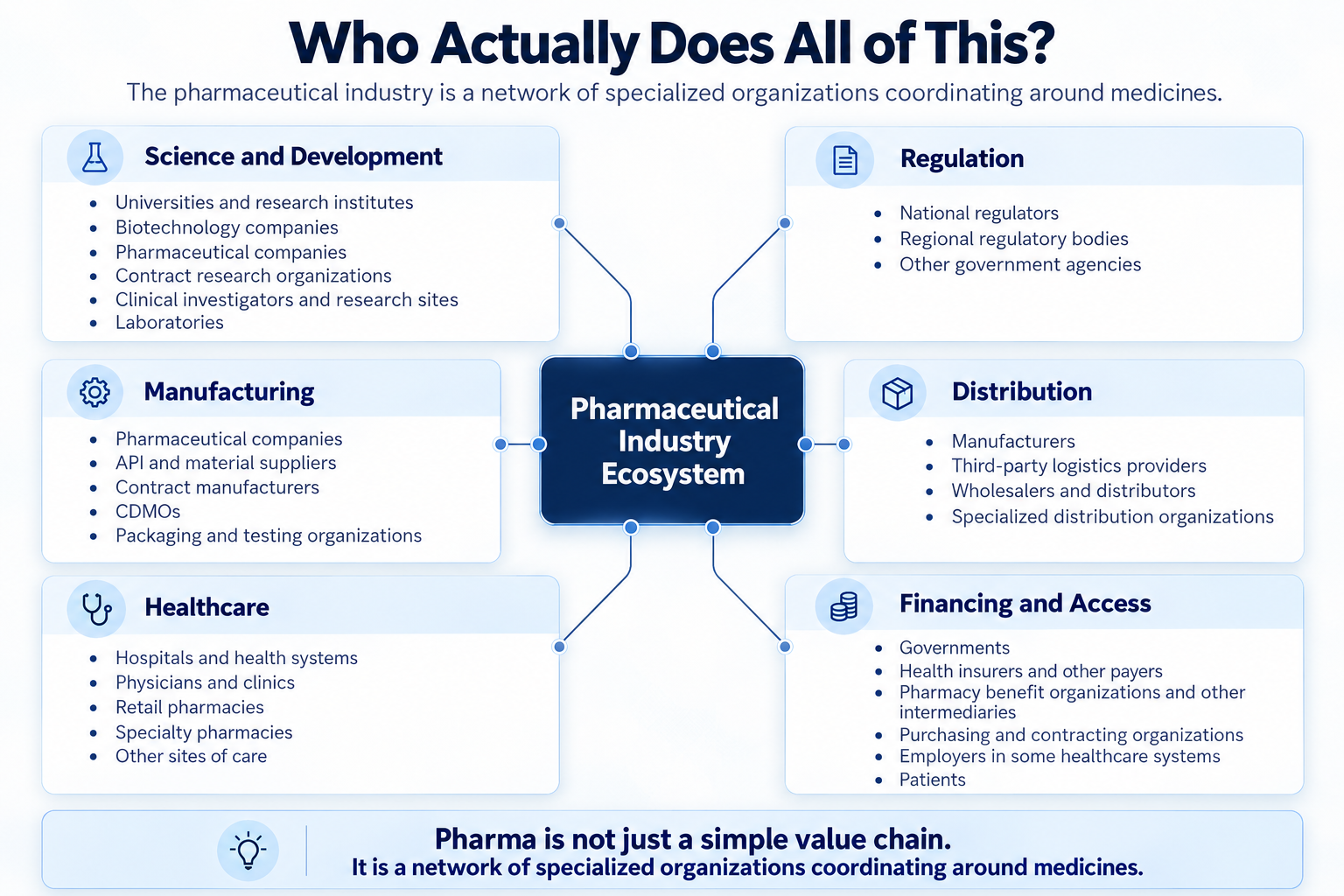
There is no single company called “the pharmaceutical industry.” What looks like one industry from the outside is a network of organizations performing very different jobs.
Some discover medicines. Some fund or develop them. Some own the legal right to sell them. Some manufacture them. Others store, distribute, prescribe, dispense, administer, reimburse, regulate, or track them.
Start with the patient
A patient needs a medicine or therapy. Everything upstream exists to discover, develop, manufacture, approve, finance, deliver, and monitor that treatment.
Then move backward through the network.
The major actor groups
Innovator pharma and biotech
These organizations own or develop drug assets, clinical programs, intellectual property, regulatory dossiers, and eventually commercial products.
Manufacturing organizations
Internal plants and CMO/CDMO partners create drug substance, finished product, fill-finish operations, and packaging.
Distribution and care delivery
3PLs store and fulfill product. Wholesalers buy and redistribute it. Health systems, clinics, and pharmacies receive the medicine closer to the patient and ultimately dispense or administer it.
Economic and regulatory actors
Payers, PBMs, and GPOs influence access, contracting, reimbursement, and formulary economics. Regulators define the legal requirements for approval, quality, safety, traceability, and market participation.
Three flows run through the system
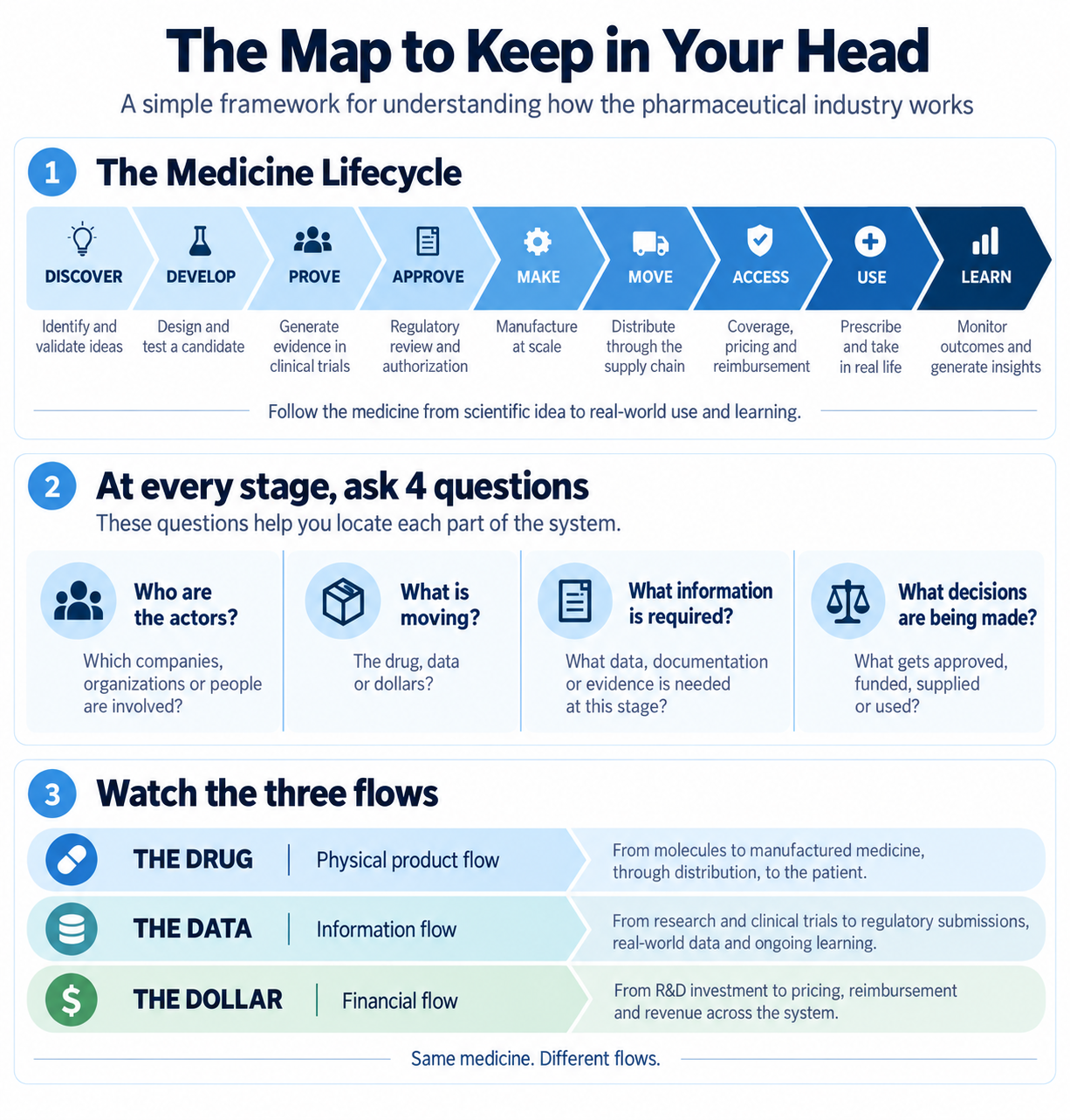
The drug moves physically. The data describes identity, custody, events, orders, shipment, and receipt. The dollar moves through purchase, reimbursement, contracting, rebates, credits, and chargebacks.
The terms map
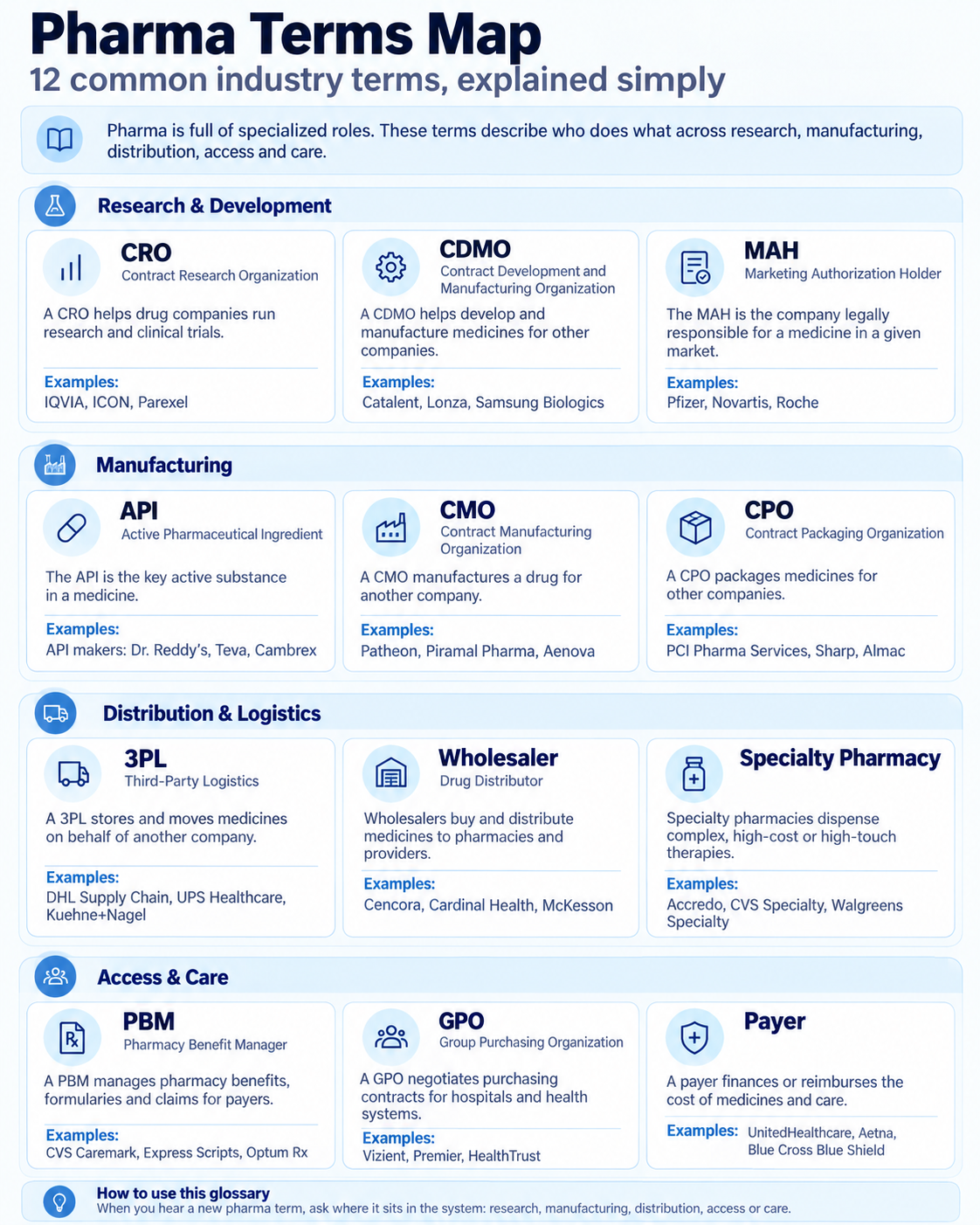
The acronyms become much easier after the roles are clear. Use this visual as a reference rather than trying to memorize it in one pass.
Sources and references
- U.S. Food and Drug Administration, drug development and approval resources.
- GS1, healthcare identification and EPCIS standards.
- U.S. Drug Supply Chain Security Act materials.